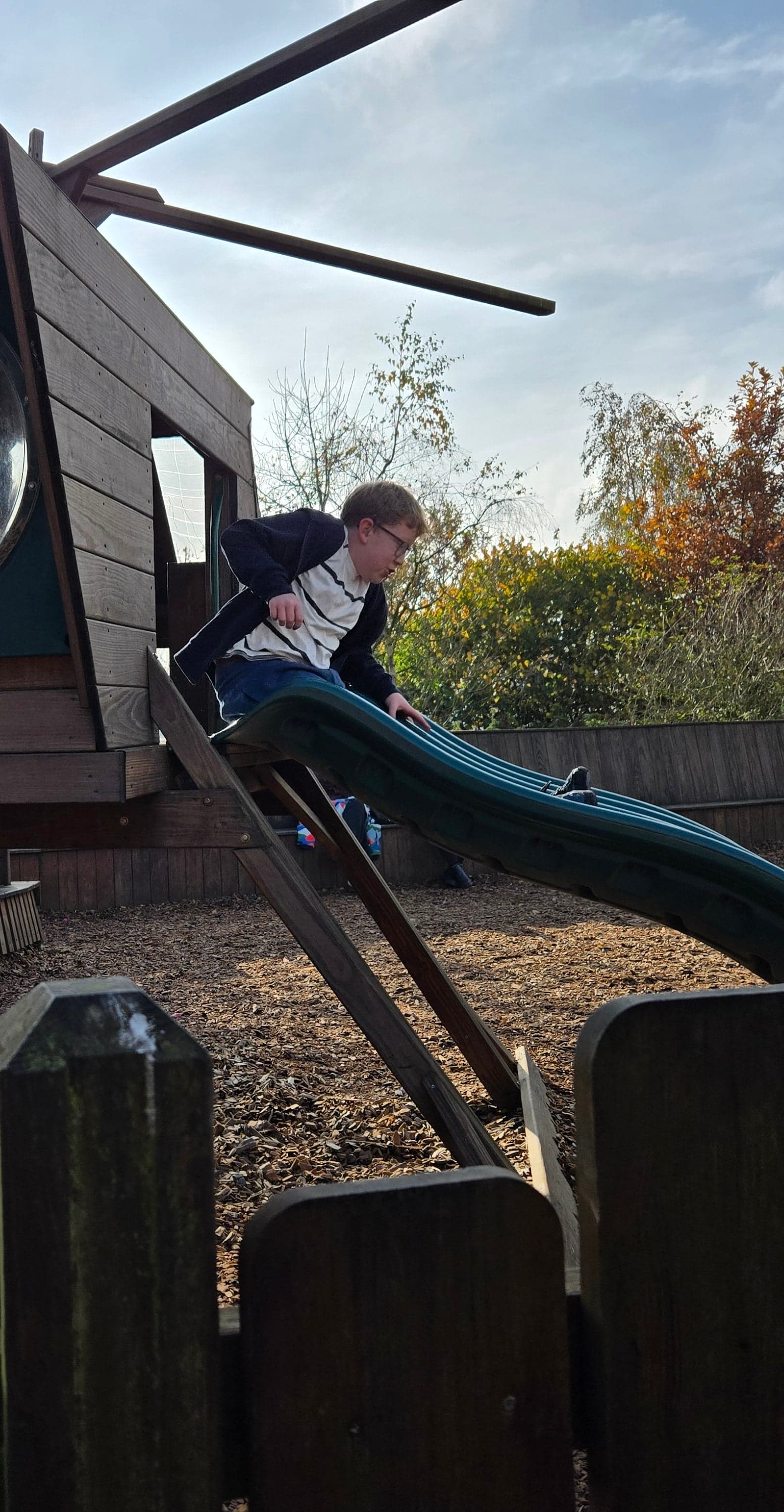
Laura's Story

“We both wear glasses – but even we still missed our child’s short-sightedness.”

An estimated 1.6 million children in England - one in five - are living with an undiagnosed vision problem.¹ For a while, without her realising, Laura Braime's son was one of them.

Laura, from Brighouse in West Yorkshire, is short-sighted, and so is her father. With Children twice as likely to develop short-sightedness if one parent has it, and five times more likely if both do², she knew the odds were against her son Thomas. 

A false reassurance

A false reassurance

So when her eldest, Thomas, had his school vision screening and nothing was flagged, she was relieved - perhaps, she thought, he had escaped it after all.  

“You think, oh well, maybe it’s fine. Maybe he’s going to be all right,” she says.  Laura suspects a lot of parents have exactly that same thought. But it’s a false reassurance.  

School vision screening is genuinely useful. It picked up a different condition in Laura’s younger son, William. But it is not a full eye test. It is usually offered to children aged four or five.³ Short-sightedness often develops later, between the ages of six and 13⁴, so regular eye tests matter even if nothing was found at school.  

“I just assumed that if the school hadn’t picked anything up, his eyes were fine. I didn’t realise the screening isn’t a proper eye test, and I’m sure a lot of other parents are the same.”  

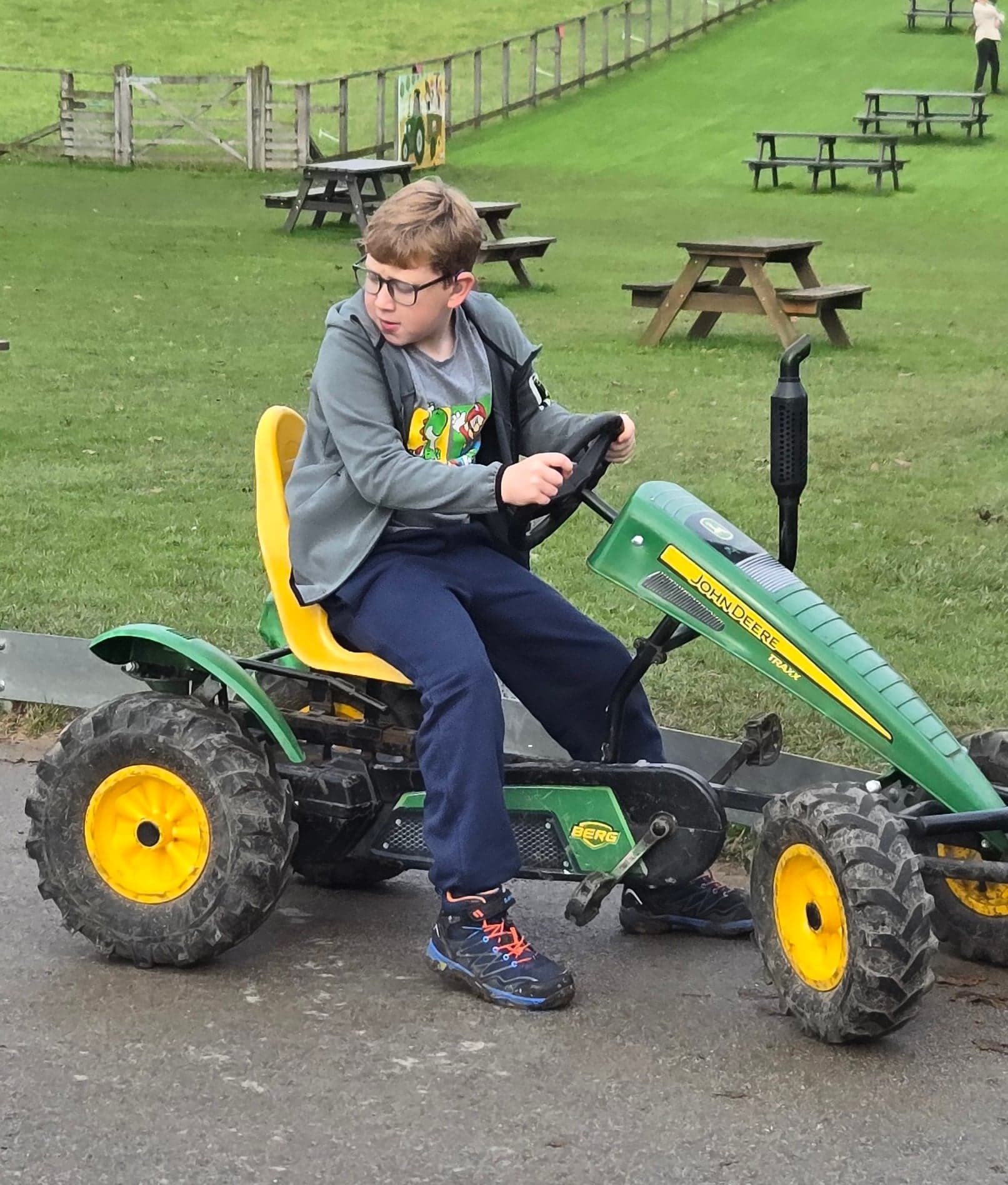
It was a good few years later that Laura started noticing something familiar in Thomas: headaches, constant blinking, rubbing his eyes, sitting closer and closer to the television until he was practically against the screen.  

"When you look back, you think, okay, headache, rubbing his eyes," she says. "Because I'd had similar symptoms myself, I just went straight to the opticians."   

At Donovan Smith Opticians in Brighouse, an eye test confirmed what Laura suspected. Thomas was short-sighted, but only mildly, because she had caught it early.  And that was when Laura’s eyes were really opened.
What Laura didn’t know

What Laura didn’t know

Children under 16 are entitled to a free NHS eye test, and to an NHS optical voucher towards the cost of glasses if they need them⁵ – but many parents aren’t aware of this.

“To be honest, I didn’t know that they were free until my optician flagged it to me,” she says. “I also didn’t know that your child doesn’t need to know the alphabet to have an eye test, it can be done with pictures and symbols instead.”

Her optician also explained the link between screen use and short-sightedness, and the protective effect of time spent outdoors. The risk rises with screen time, according to a 2025 analysis of more than 335,000 children and young people, with the sharpest increase between one and four hours a day.⁶ Outdoors, it works the other way: bright natural light appears to help regulate how a child's eyes grow, with a pooled analysis of seven studies finding that each extra hour spent outdoors a day was linked to around 13% lower odds of being short-sighted⁷.

“It makes sense once someone explains it to you,” Laura says. “But no one ever had before.”

More than a stronger prescription

More than a stronger prescription

The eye test brought a bigger surprise still. Laura had grown up believing glasses could only ever correct blurry vision.

Diagnosed herself while still at primary school, she remembers her own prescription repeatedly increasing through childhood and into adulthood.

“Every single time I went to the opticians, my prescription had changed. It was getting worse and worse and worse,” she says.

She carries spare contact lenses whenever she travels, in case something happens to her glasses.

“I literally couldn’t do anything if I didn’t have my glasses on,” she says. “I just wouldn’t be able to function without them.”

But Thomas’s optician had different news. Spectacle lenses now exist, he explained, that do more than correct blurred vision. They can help slow the eye growth that causes short-sightedness to worsen, limiting how short-sighted a child becomes as they grow. For Laura, this felt like a no-brainer and Thomas was fitted with a type of glasses lens that slows progression, HOYA MiYOSMART.

MiYOSMART iQ

MiYOSMART iQ

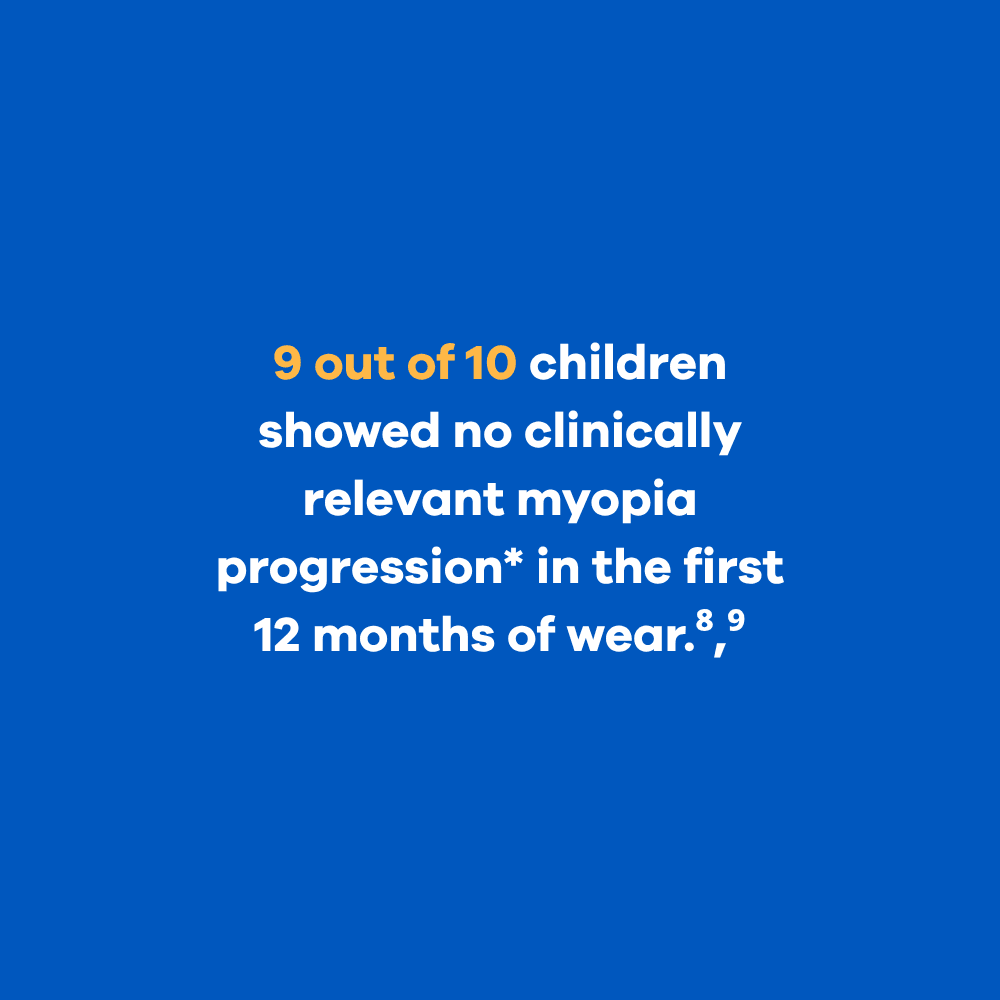
Even in the time since Thomas was diagnosed, the technology has moved on further. HOYA has just released a newer spectacle lens, MiYOSMART iQ, with a recent clinical trial finding that nine out of ten children showed no clinically relevant progression* of their short-sightedness in the first 12 months of wear.⁸,⁹

For Laura, the hope is that Thomas’s experience as he grows up could be different from her own.

“It absolutely blows my mind,” she says. “Being somebody who can only ever get a correction, that’s great, and I’m glad I can see, but it would be incredible to think that I didn’t get to this point, or that it was significantly less severe.”

Since Thomas started wearing his glasses, the difference has been clear. The headaches have stopped. He is less tired after school and can sit anywhere in the classroom rather than needing to be at the front.

“He’s definitely less tired when he comes home after a day at school, because he’s not having to work as hard with his vision,” she says.

“It’s incredible to think that he may not be in the same position as me, which will be wonderful for him,” she says. “I just wish it was around when I was younger.”

Helping parents know what to ask

Helping parents know what to ask

Laura credits her optician with helping her understand her own condition well enough to recognise the signs in Thomas.

“Parents don’t know what they don’t know,” she says. “I’ve worn glasses for three decades, and there was still so much about school screening, full eye tests and modern glasses lenses that I hadn’t realised. Somewhere reliable to get the facts quickly would help enormously.”

That need is at the heart of Vision Revision, a free online resource from HOYA that helps parents recognise the signs of short-sightedness, understand school screening and learn what modern lenses can offer: practical guidance, questions to ask their children, a visual simulator showing how blurred vision can look, and a tool to find a local optician.

For Laura, the value of that knowledge is clear.

“If I hadn’t learned so much about my own condition, I definitely wouldn’t have been in a place to recognise it in Thomas,” she says. “With lens technology advancing so quickly, catching it early now matters more than ever.”

Learn more about protecting your child's vision

Disclaimer:
*Clinically relevant myopia progression is a change in cycloplegic spherical equivalent refraction of -0.50D or worse.
Outcomes for myopic children aged 4 to 12 years in the first 12 months of wear, and may vary per age group and other parameters at the start of MiYOSMART iQ treatment.

References:

  1. Thomson, City University London. Cited in National Eye Health Week 2025, "1.6 million school-aged children estimated to be living with an undetected vision problem," analysis of 2016 Department for Education School Census data

  2. Martinez-Albert, Risk Factors for Myopia: A Review, Journal of Clinical Medicine, 2023

  3. https://www.nhs.uk/tests-and-treatments/eye-tests-in-children/

  4. https://www.nhs.uk/conditions/short-sightedness/

  5. https://www.nhs.uk/tests-and-treatments/eye-tests-in-children/

  6. Ha A, et al. Digital Screen Time and Myopia: A Systematic Review and Dose-Response Meta-Analysis. JAMA Netw Open, 2025

  7. https://pubmed.ncbi.nlm.nih.gov/22809757/

  8. Tse DY, Hon Y, Chun RK, et al. Myopia Control Efficacy of Defocus Incorporated Multiple Segments Spectacle Lens with Triple Enhanced Design: a 12-month randomized controlled trial. Invest. Ophthalmol. Vis. Sci. 2026;67(7):2523.

  9. HOYA data on file. HOYA MiYOSMART iQ spectacle lens clinical outcomes. 04/2026.